
By Earl Gertler
Earl is a student at the University of King’s College in Halifax, Nova Scotia and a warden of its chapel.
“And therefore, if we have charity at all, we have it in friendship and reciprocity.” (Images of Pilgrimage, p. 83)
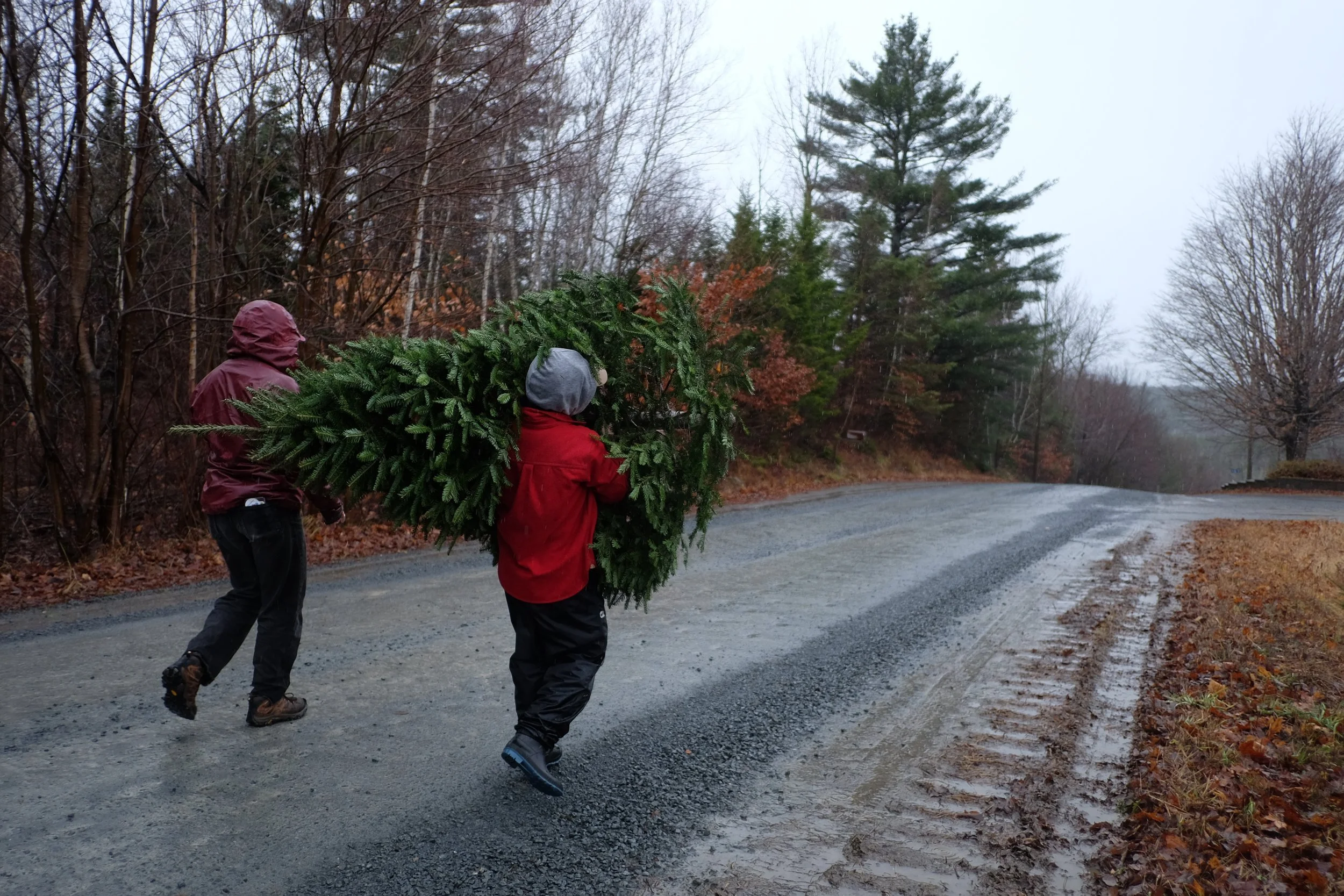
The torrential downpour and the distinct chill of a Saturday morning in late November kept me and the photographer, Lokwing patiently in the car. Anticipating with us the arrival of Doris House—with the keys to an inner world—was a group of ten others. Today was the day of the Chapel’s Christmas tree hunt. Most of us had been on the road since the afternoon prior, spending the evening at Cecelia von Bredow’s baptism and the night in the parish hall of Christ Church Shelburne. Our Chaplain, Fr. Ingalls, had shrewdly proposed we say Morning Prayer at St. Mary’s, Crousetown, and to many of us—having only met the late Fr. Crouse in memory through beloved professors and spiritual mentors, friends, a book launch weekend, hand-me-down traditions, and scattered sermons lingering in corners of a humble university chapel—this sounded like the right idea. The grey skies, tall trees, and unrelenting rain seemed to insist upon the wilderness we found ourselves in...
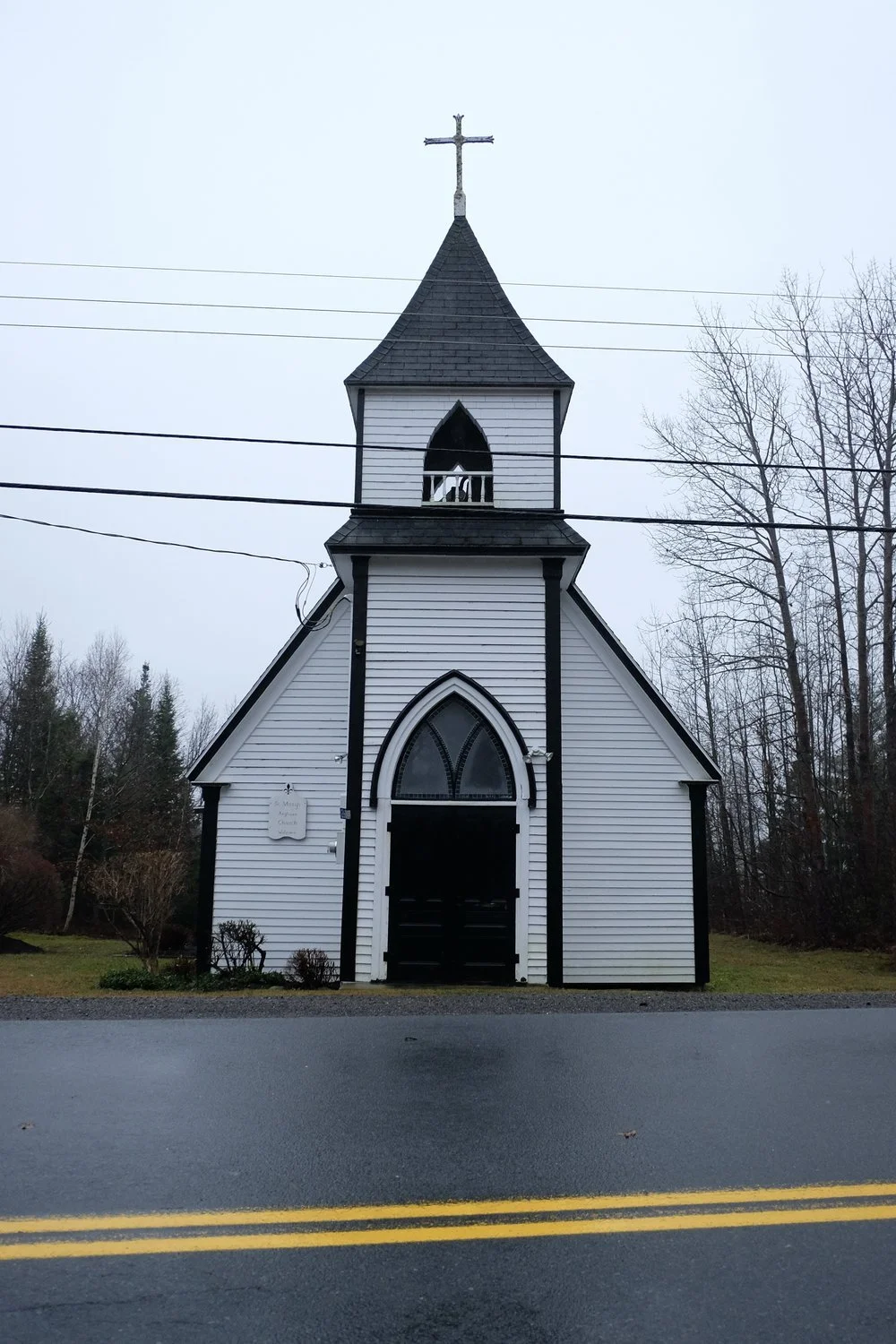
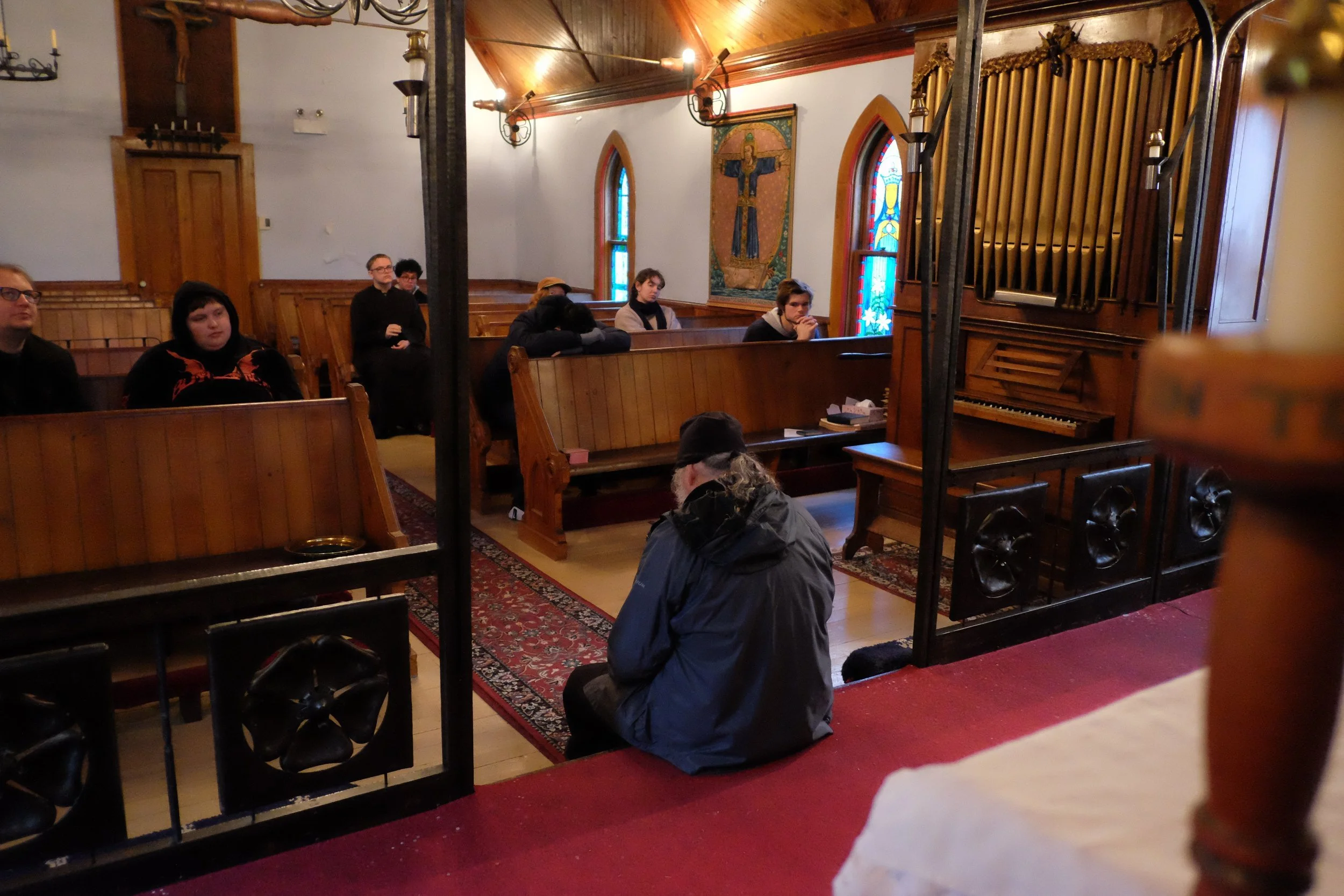
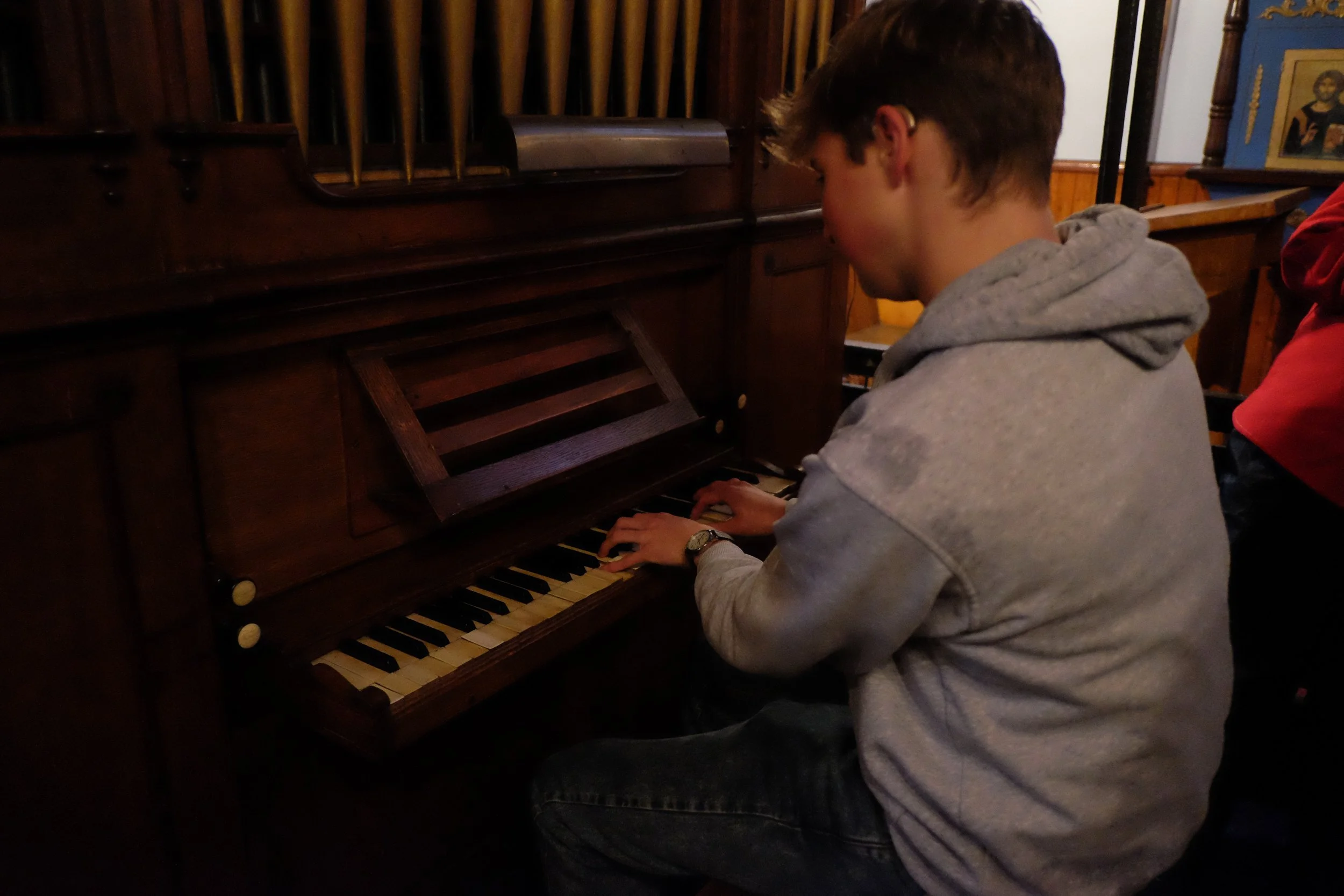
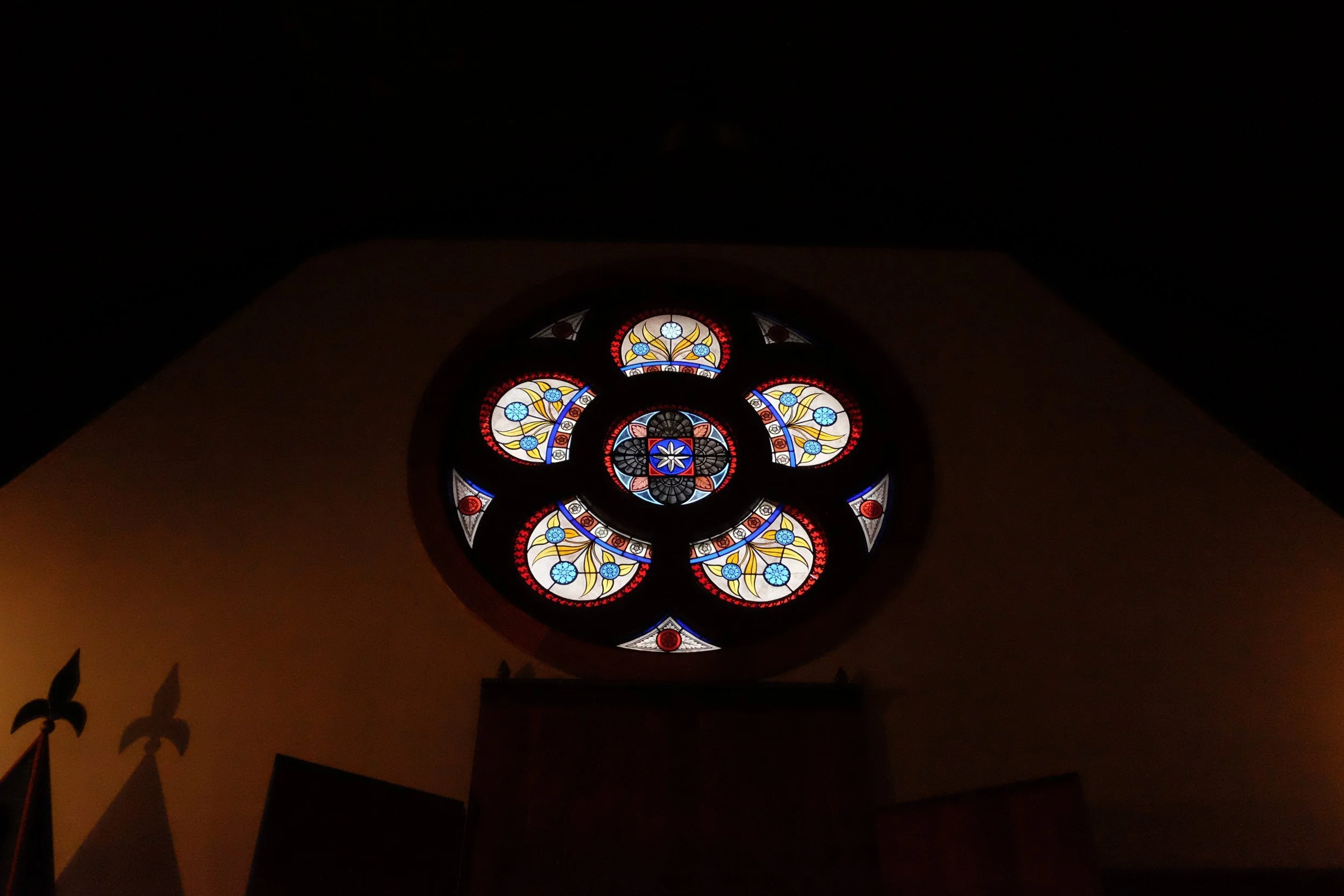
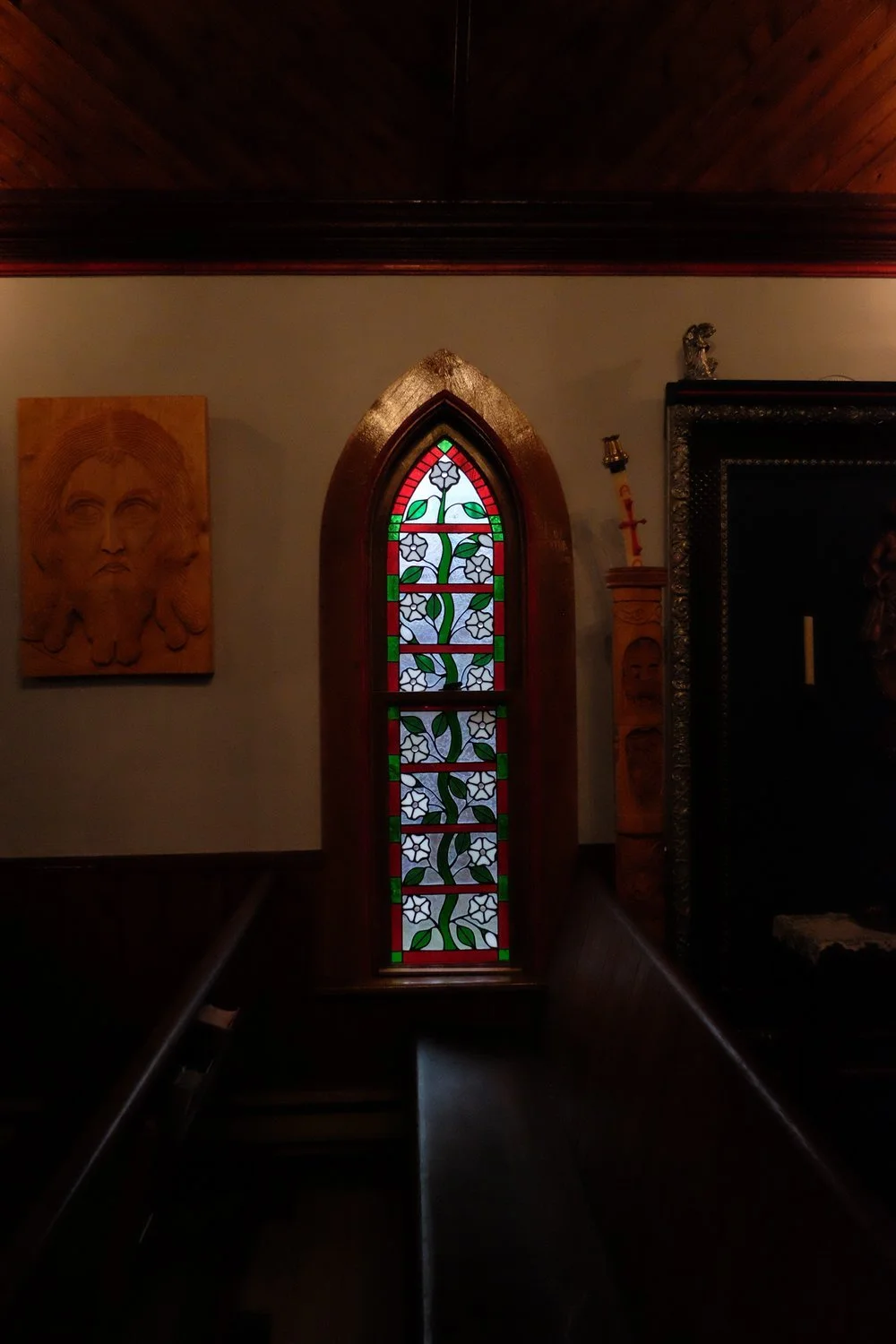
There was an absence of being in any sort of rush as raindrops and the anticipation of prayer began to melt away rigid time. The proud little church is firmly rooted on the side of Italy Cross road. Beautiful yet irregular stained-glass windows, each differing from the next, are the only instances of colour that can be seen when standing outside of the white and black structure. Doris let us in through the back sacristy door. What I had observed from the exterior was immediately confirmed upon my first step through this door; this is one of them good ol’ wooden churches. Perhaps you’ve driven past ones just like it on a country road. Maybe even walked inside or worshipped in one. The sudden scent of earthiness mingled with lingering incense entertains the senses. The lights dim or nonexistent. Lumber holds ancient memories of the building’s foundation. Old carpet floors, an eccentric collection of art posters, iconography, and other religious tchotchkes that fill the back room only foreshadow their expansion in the sanctuary and main part of the church.
There is something, perhaps a feeling, that is vaguely familiar upon entering the sanctuary for the first time. St. Mary’s, Crousetown is a church steeped in generations of memory and worship. I think its importance for us lies in the significant impact Fr. Crouse has had on our lives. Fr. Crouse’s influence continues to shine on a new generation who never got to meet him in the flesh. Perhaps there are different reasons why each of us came to study at King’s or live on this coast. Yet regardless of motive, I think maybe everyone who has stepped through the threshold of the humble Chapel doors comes seeking something. Fr. Crouse seems to have known and perhaps was seeking something similar as he writes:
In that working out, the trials of the wilderness have a necessary place. Trial and temptations, the dark night of doubt, confusion, and uncertainty, are not just unfortunate accidents. In God’s good providence they belong to the very life of faith…Perhaps those trials take different forms in one age or another, and different forms for each of us; but always they are, and must be there.” (p. 79-80).
Maybe what we are seeking is a way of life within this present, secular age, something that feels all the more urgent as a young person beginning to figure out how to create their life. But I don’t see it as a question any less important to people of any age or generation. “The confusions of the world in which live, uncertainties within the Church, confusions with our own souls” are common struggles for us all, “and it is surely not very easy to ‘count it all joy’, and discern and celebrate the lineaments of paradise within it.” One of the life-giving lessons Fr. Crouse passes on to us is a reminder “that this is precisely the nature of our calling, and, by the grace of God, who gives the Bread of Life in the wilderness, we are not without resources to do just that.” (p. 80-81).
There are so many things in this world that scare us. So often we desire to have it all together; to be able to face the trials and temptations of life as a strong skipper sails their boat through the unpredictable winds and waves of the open sea. “The fact is that we do not have it all together,” Fr. Ingalls read to us from the final chapter of Fr. Crouse’s Images of Pilgrimage during our office of morning prayer that day, “We have it in all the manifold diversity of the Spirit’s gifts; not as just one point of light, but spread out among us, diversified.” Perhaps one could sum up Fr. Crouse’s gifts to us as one does the Christian virtues which he extols us to cultivate steadily. We seem to have inherited what can be encapsulated as a humble seeking of a life of charity; “holding on to the centuries of Christian wisdom, holding fast to our road of pilgrimage…All depends, really, upon the prayerful life.” (p. 84) And it is our engagement to this prayerful life that brought our rag tag collection of friends along the pilgrim’s road to little St. Mary’s that chilly, wet Saturday morning. Because, deep in our hearts we know, “if we have charity at all, we have it in friendship and reciprocity.”