
By Alex Fogleman
Alex Fogleman (PhD, Baylor University) is an Assistant Research Professor of Theology at Baylor University’s Institute for Studies of Religion and director of the Catechesis Institute. He is the author of Knowledge, Faith, and Early Christian Initiation (Cambridge University Press, 2023). This review originally appeared in The North American Anglican.
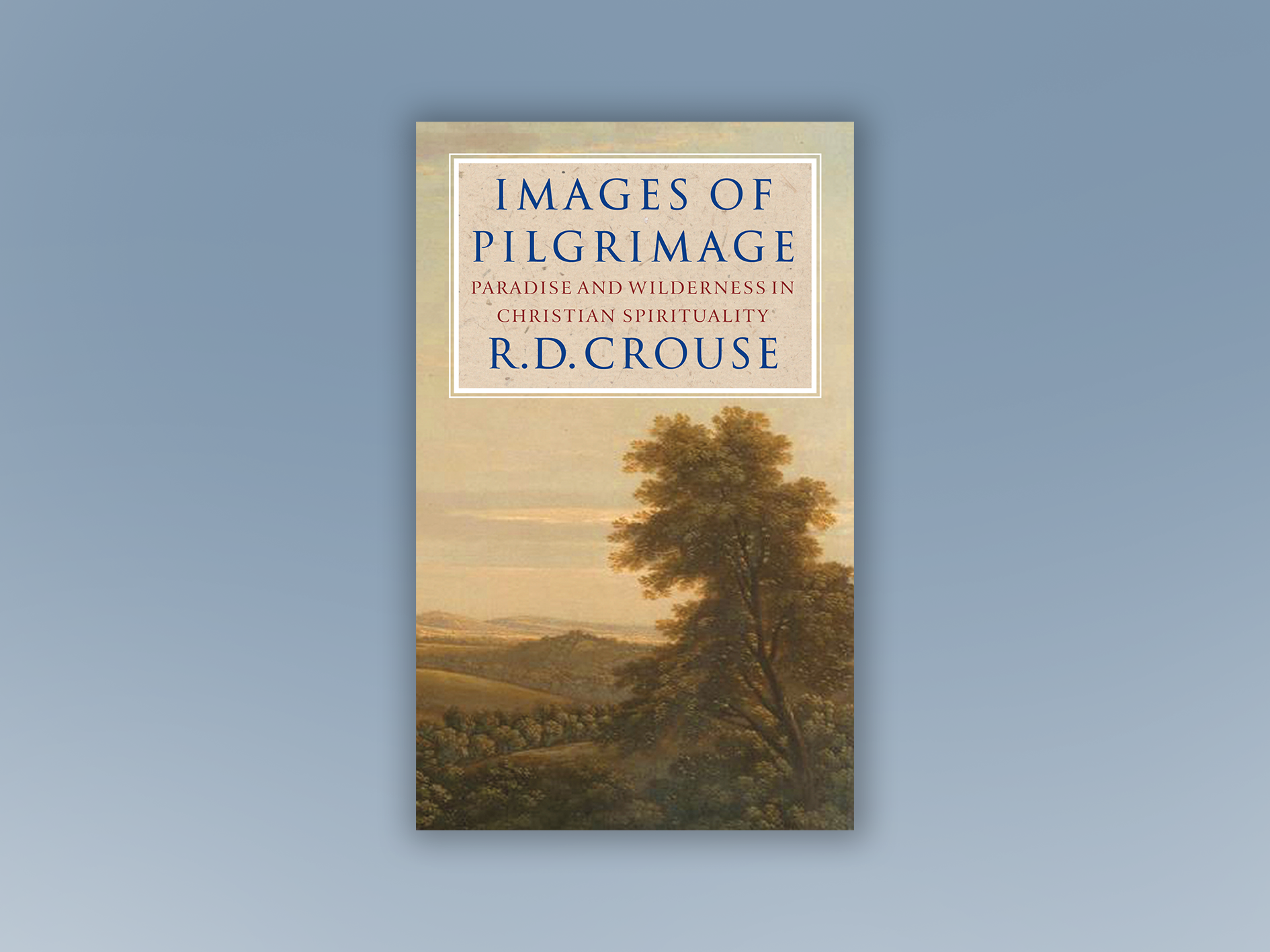
The late Anglican theologian Robert Crouse (1930–2011) may be one of Canada’s best kept secrets. An Anglican priest, teacher, gardener, musician, and, above all, contemplative, Crouse was a leading expert in patristic and medieval spiritual theology, especially Augustine and Dante. He taught and wrote with a humble, simple style that belied an extortionary spiritual depth, calling the reader to pause and ponder, to look again at what you thought you knew.
Crouse is not a widely known name outside of Canadian Anglican (and mostly Anglo-Catholic) circles. Crouse lived most of his career in the small Canadian town — his ancestral home — of Crousetown, Nova Scotia. From 1963 until 1996, he taught Classics at Dalhousie University in Nova Scotia, while lecturing widely across Canada, the US, and Europe. He was the first non-Catholic to hold a position at the Institute Patristicum Augustinianum in Rome.
Those who did know him, though, can’t seem to speak enough good about him. David Lyle Jeffrey describes him as “one of the great spiritual masters of the twentieth century” who “gracefully and perceptively brings the spiritual depth and intellectual brilliance of pre-Christian classical and bib- lical traditions into high relief.” Rowan Williams praises the wide range of his learning and writings that are “quietly authoritative in tone, unfussy and measured in style.” Carol Harrison, Anthony Esolen, Douglas Hedley, and others pro- vide similarly radiant praise.
Thankfully, though, the secret’s out. A new collection of his writings is being edited by a cohort of his former students: primarily Gary Thorne, Stephen Blackwood, and Neil Robert- son. The collection will comprise, in toto, a short introductory volume on the theme of pilgrimage; a three-volume series of sermons on the church year, the Christian life, and the Holy Trinity; a book of theological essays; and commentarial works on the writings of Boethius and Dante. The first volume and two volumes of sermons have been published, with the others forthcoming.
What emerges is an extraordinary spiritual vision of the Christian life as a pilgrimage — well-trod terrain, you might think, especially for those of an Augustinian bent. But on Crouse’s itinerary, every bend in the road pulsates with life and light. I’ll try to show some of this richness in the short initial volume of the collection, Images of Pilgrimage: Paradise and Wilderness in Christian Spirituality.
In the philosophical and literary canon of the Greeks and Romans — from Homer Aristotle to Virgil and Cicero — Crouse discerns the deep paradox of dignity and tragedy that textures the pagan vision of pilgrimage. The human telos is beyond human nature, but, at the same time, it is ever out of reach. “The divine good,” as Crouse quotes Aristotle, “is a lift too high for man.” The divine is beyond the limit of our nature, and it’s our only true hope of happiness.
The kind of pilgrimage entailed in such a vision is an inexorably cyclical one, in which humanity is caught and from which it cannot escape. Pilgrimage and struggle remain locked in arms, an unbridgeable gulf between the wilderness of the pilgrim’s journey and the paradise that is his destina- tion. “Heroic virtue, heroic aspiration, is heroic hubris, and is destined for defeat. That is the worm at the heart of pagan spirituality: the endless cycles of aspiration and despair” (Images of Pilgrimage, 20; emphasis original).
In Christianity, however, especially in its Augustinian and Dantean inflections, the impasse depicted in pagan pilgrimage finds its truest expression and resolution.
In the Christian spiritual vision, pilgrimage is also tex- tured by paradise and wilderness. Paradise is at once the garden of our origin, the city to which we aspire, and — if our eyes are trained to see — the moments of divine in-breaking that, however subtly, reorient our lives in the present.
Most significantly, Christ provides a way out of the pagan impasse of cyclicality and despair. In melius renovabimur, as Augustine puts it. “We shall be changed into something better.” Christ, as both way and goal, via and patria, grants full weight to the plight of human longing for God, but, in the Incarnation, Christ not only illumines the path but becomes the way itself. Where paganism could only end in despair, however heroic, Christ affirms the vision and provides a real possibility of reaching it. Plato could see the patria, but “without the via, the blessed homeland must remain only a vision, never an habitation” (Images of Pilgrimage, 57; see conf. 7.9.13–15).
Wilderness and paradise remain central to Christian pilgrimage, but their meaning is almost entirely reformulated — or, perhaps, transfigured. Wilderness is not just “remedial discipline,” a return to innocence, but the “sphere of spiritual activity which results in something better” (Images of Pilgrimage, 53). The cardinal virtue is not muscular endurance but love, that weight (pondus) that propels us out of the cyclical despair and on the way of the Incarnate Christ that leads us out. It is, quite literally, the pilgrimage of love that “educates” us, that enables us to be “led out”: led out of our sin-incurved selves, out of the endless cycles of aspiration and de- spair, out of tragic heroism.
Crouse’s Dante is equally mesmerizing: as capacious and expansive as medieval architecture and indeed the cosmos itself. Yet his remains, as with Au- gustine, a pilgrimage of the heart, the journey of every Christian wayfarer. Once again, the Christian maestro plumbs to the depths of pagan wisdom and shows its true light and renovation in Christ. The river Lethe is no longer the river of forgetfulness, as it was for Elysium of Virgil and Plato — the necessary cleansing for a return in the next cycle. It is the baptismal river of cleansing of sins; it is the healing waters that purify the journey in melius.
Pilgrimage, of course, didn’t end with Dante. Not only in Milton and Bunyan but also in Goethe, Kafka, Camus — even Marx’s Das Kapital — pilgrimage is deeply entrenched. “What are all these, and countless others, but images of wilderness and paradise, Chris- tian and pagan; paradise lost, paradise sought, paradise regained, or paradise impossible?” (78).
Christian pilgrimage, though, and the images of wilderness and paradise, retain distinctive cast. The two images are not just opposite poles: wilderness now, paradise to come. Paradise is to come, but it is also here. “Christian spirituality is neither ‘this-worldly’ nor ‘other-worldly’ — these are its temptations and distortions; authentically, it must be lived in the ten- sion between these worlds, in the ambiguity between paradise attained and paradise to come” (79). Our reconciliation is at once finished and yet, in another sense, it remains incomplete.
Crouse’s writings — and I have just provided a small sampling here — provide the very thing he de- scribes as central to pilgrimage: neither otherworldly nor this-world, they are paradise in wilderness, the bread of patria for pilgrims on the way.