
“We must ourselves become better theologians:” WORC Saturday Seminars
By the Rev’d Christopher Tidd
The Rev’d Christopher Tidd is a deacon in the Diocese of NSPEI, recently ordained on the Feast of St. Nicholas.
In the Fall of 2025, the Works of Robert Crouse offered the first two iterations of its inaugural Saturday Seminars in the Diocese of Nova Scotia and PEI.
Born out of a desire among Anglicans, young and old, to deepen their understanding of the Anglican Tradition, the Saturday Seminars seek to answer Father Crouse’s challenge that we might contribute to the renewal of our parishes by becoming theologians. At the first Atlantic Theological Conference Father Crouse stated that,
First of all we must ourselves become better theologians. And that means, I think, that we must immerse ourselves more and more fully in the Scriptures and the theological tradition of the Church…
And this indeed is the purpose of these seminars and the desire of those who have so far been involved; to more fully understand and accept the great inheritance we have received from the Church as a way of deepening our love of God, one another, and the world.
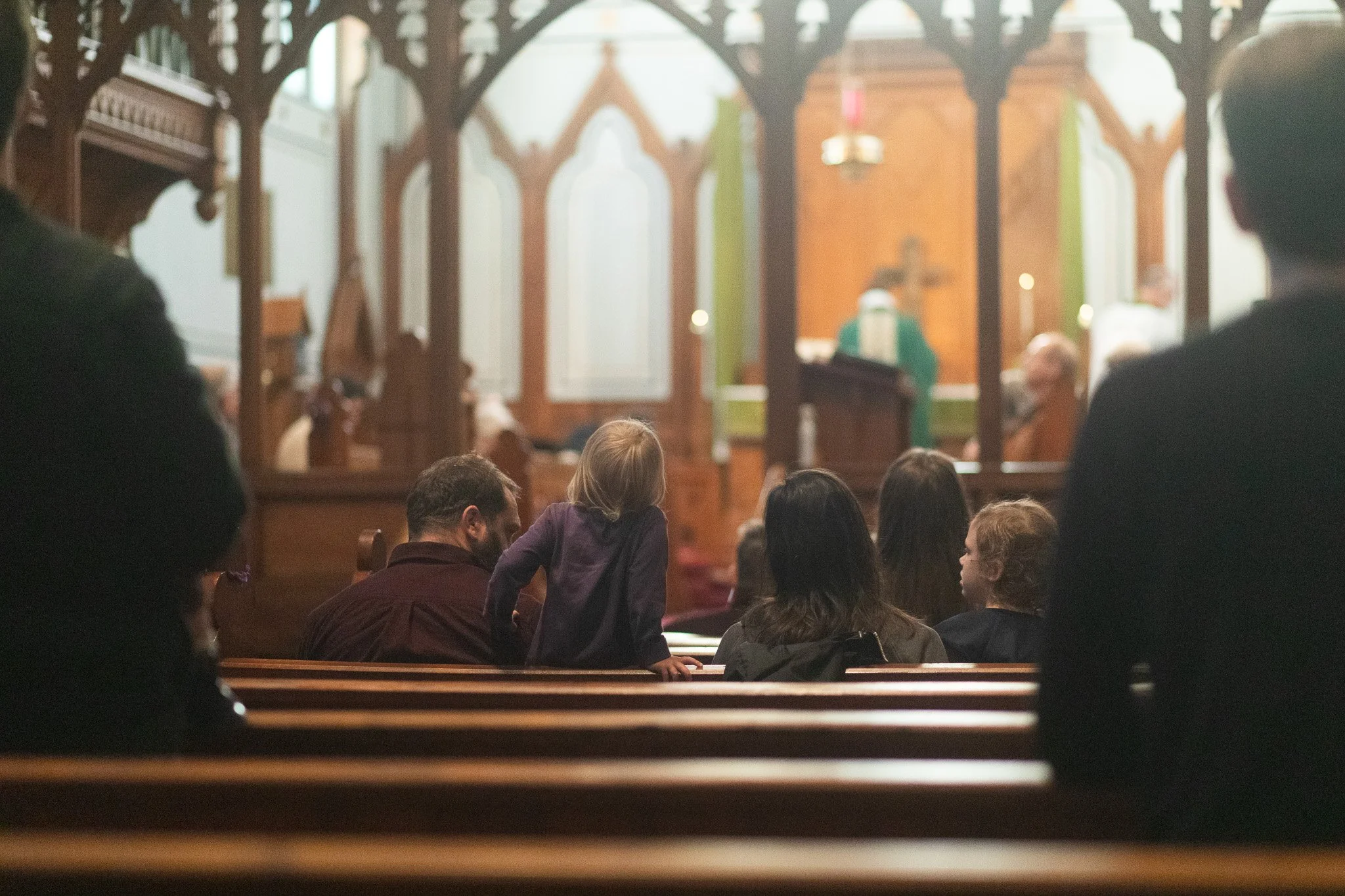
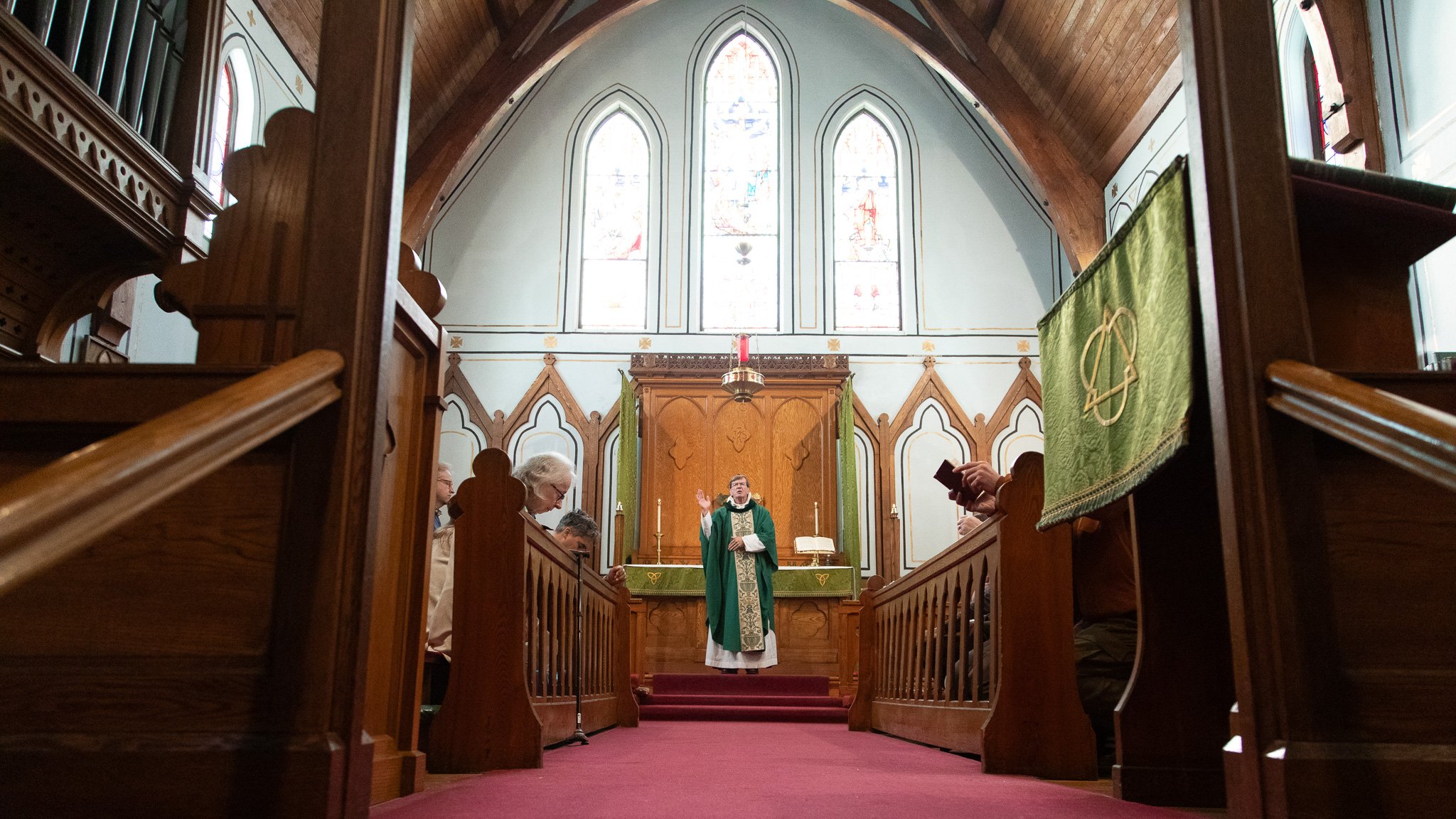
Each of the Saturdays began with Morning Prayer and Holy Communion from the Book of Common Prayer before the morning’s lecture. With many young families in attendance, the sound of children playing and scurrying echoed through the church during worship before they set off to have their own time of fun and fellowship. After mid-day prayers, lunch was provided so that fellowship could extend to all in attendance, before the day concluded with an afternoon lecture and Evening Prayer said by all.
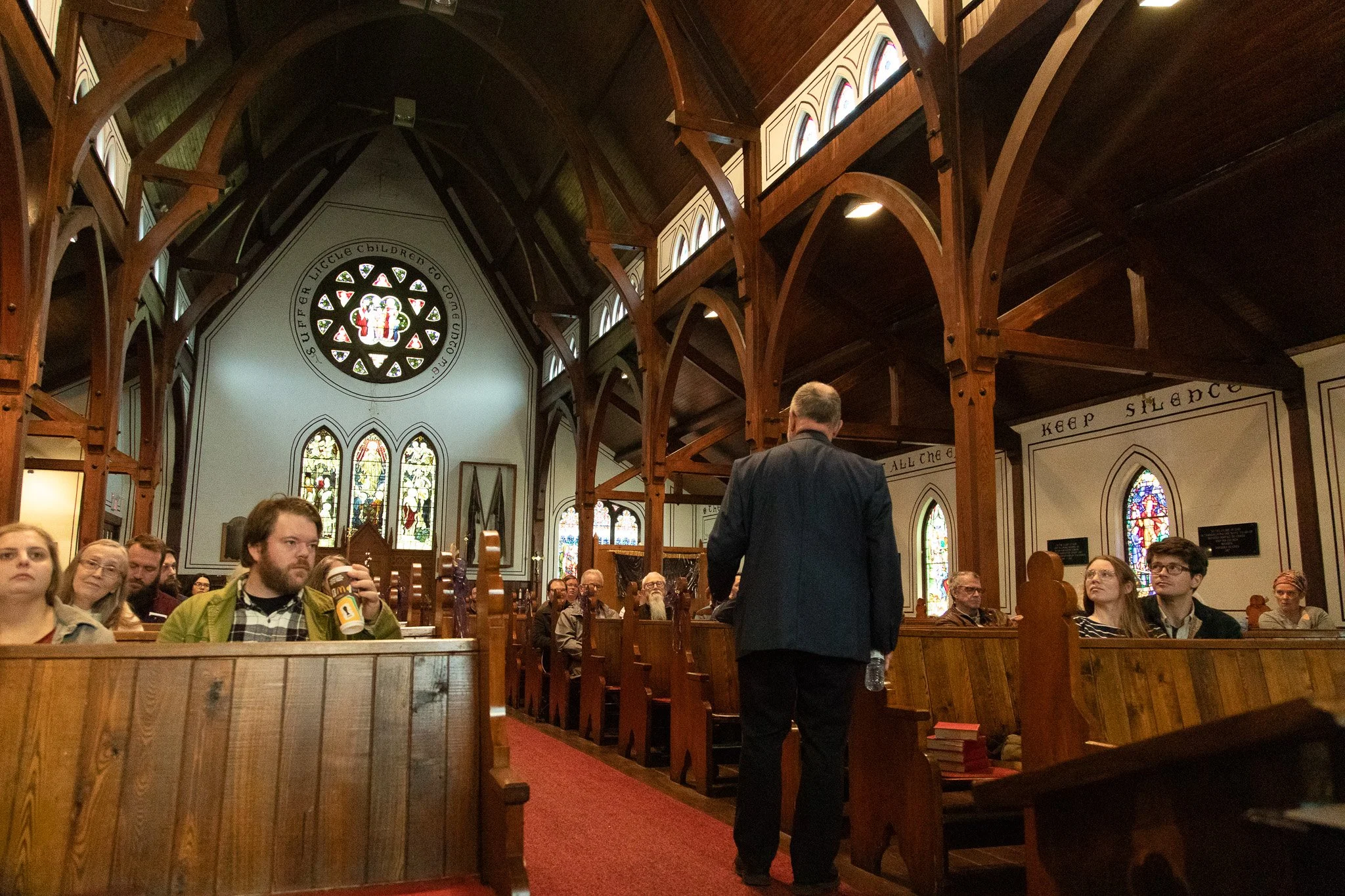
The first lecture offered by Fr Ross Hebb worked to set the stage for the seminars by providing the historical and cultural context of the Reformation in England. A brilliant and engaging lecturer, Fr Hebb was able to skilfully lay out the primary issues of the time and how they would come to influence the Anglican Tradition then and now. How the English Church sought to retain its catholicity while finding the means and mechanisms for reform, working through issues of power and authority between church and state, and discerning what was essential to the faith and tradition were covered in a concise yet fulsome manner by Fr Hebb’s opening lecture. Leaving us with the question of whether or not all that had unfolded during the 16th century was secure enough to last, Fr Hebb sought to provide an answer during the second Saturday Seminar, where he covered the tumultuous 17th century. With a much better understanding of the uniqueness of the Reformation in England, its long lasting consequences, and how the complexities and conflicts within Anglicanism today are in fact not all that unprecedented after all, Fr Hebb’s two lectures laid a strong foundation of understanding of the Anglican Tradition and laid the corner stone for the subsequent lectures.
On the first Saturday, Fr. David Curry built upon Fr. Hebb’s initial lecture, offering a broad yet in-depth lecture on Classical Anglicanism, where he sought to establish the essentials of the tradition, the challenges it has and is facing, and where authority for our tradition lies. Fr Curry began by claiming that theology itself cannot be isolated into its separate categories but must instead embrace all subjects and their interrelation—not unlike the Spirit as a love knot between Father and Son, the Divinity and Humanity of Christ, and of Christ and His Church. With this in mind, Fr Curry drew our attention to the Solemn Declaration of 1893 in the Canadian Book of Common Prayer and its two-fold emphasis: The first, is our identity in Christ as members of His Body the Church, and the second, is how this particular form of our identity is expressed, lived and maintained in the Anglican Church specifically. Fr Curry thus described how Prayer Book Anglicanism, with its roots in the English Church and its development through the English Reformation, is about being faithful to what has been received, rather than creating something entirely new. For Fr Curry then, Classical Anglicanism is not an “ism” at all, but rather a spiritual and theological tradition rooted in the authority of scripture, the creeds, apostolic ministry, and the sacraments—an inheritance to be received dutifully and faithfully. To conclude, Fr Curry identified the importance of understanding that the Anglican Church is fallible, and thus to see gracefully the ebbs and flows of its history, before he raised the vital question of authority and Anglican identity as it stands today. All told, Fr Curry’s lecture worked to challenge assumptions, confirm commitments to the form of our faith, and provided encouragement in the midst of so much uncertainty about our tradition in this time and place.
On the second Saturday, Fr Chris Van Buskirk continued this encouragement in the midst of uncertainty through his lecture on how to find peace in the midst of the seeming chaos of our daily lives. His straightforward yet profound approach to the Daily Office explored the great treasure it is, and how through our faithful participation we might discover the beauty of holiness. As Fr Van Buskirk made clear to us, in the midst of the chaos of life it offers authenticity through its divine pattern; hope through its solid connection to the ancient church which persevered through much suffering; truth through the living words of scripture in its ancient lectionary; assurance that with the saints and in following the Christian calendar, we are not alone; redemption for the chaos itself; and that it challenges modern human fads with a divine pattern. It is in this way then that Fr Van Buskirk described how our saying the daily office transforms each day into the divine pattern and eternal reality where every morning becomes the resurrection of Christ, every night his death and entombment, and every week reflects the Passion.
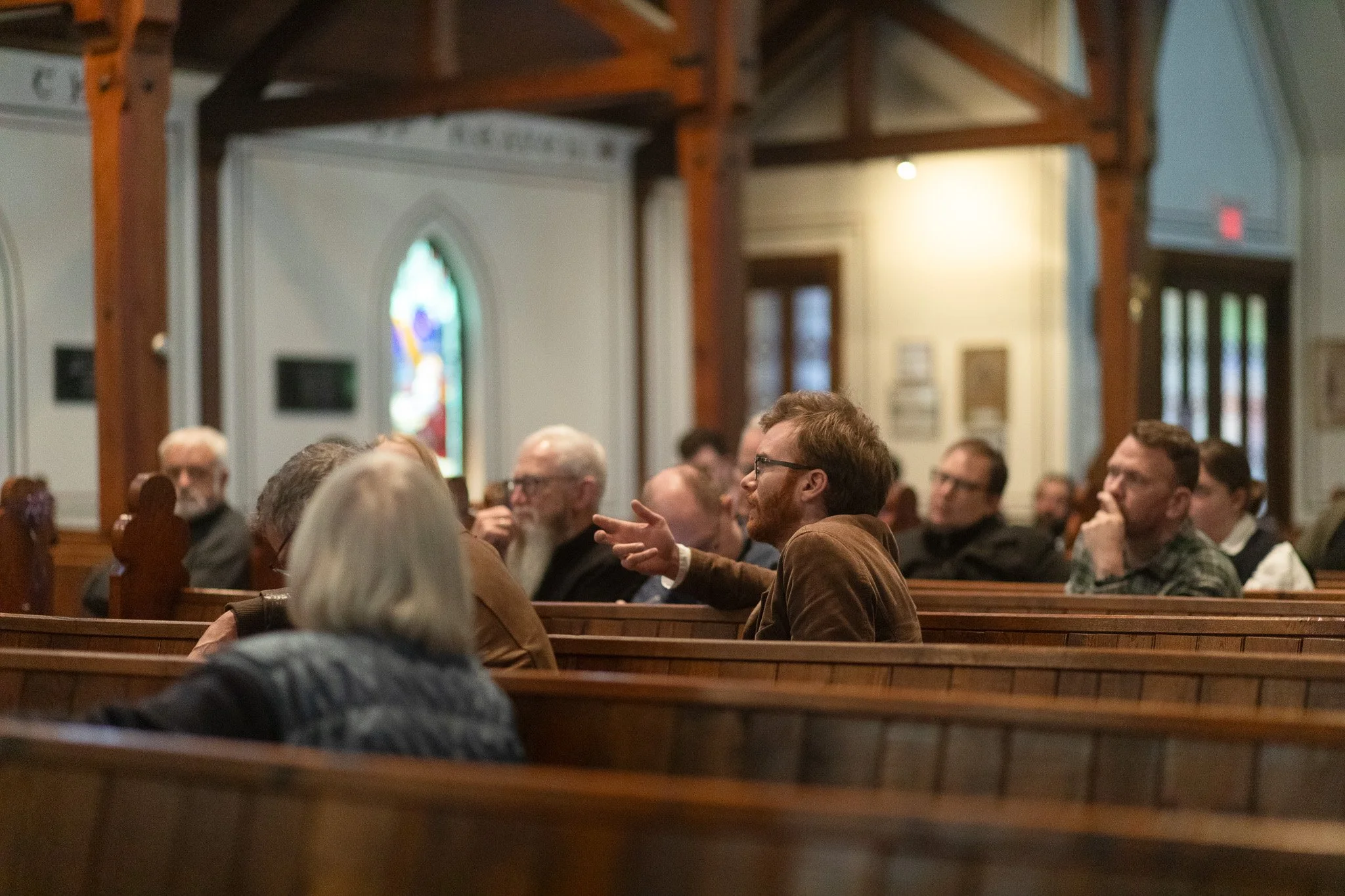
The lectures themselves have thus far been inspiring, encouraging, educational, and challenging. The precious times of fellowship and discussion throughout have, I believe, helped to fulfil a desire among so many of us who come from all over to grow in faith, friendship, and the love of Christ together as we journey in our common spiritual pilgrimage. I am sure these Saturday Seminars will be instrumental to so many in this pilgrimage as means of nurturing our growth in Christ and increasing our understanding of the inheritance that is our Anglican Tradition which nurtures this growth. We are grateful for the contributions thus far of Fr Hebb, Fr Curry and Fr Van Buskirk, as well as those volunteers who provided lunch, and offered child care to enable so many families to attend, as well as the leadership and guidance of Fr Gary Thorne.
The Collect from the Fifteen Sunday After Trinity might help to summarize the prayer of all of us who attend these seminars, in that we ask to
keep, we beseech thee, O Lord, thy Church with thy perpetual mercy; and, because the frailty of man without thee cannot but fall, keep us ever by thy help from all things hurtful, and lead us to all things profitable to our salvation; through Jesus Christ our Lord
And that, under this perpetual mercy, we might each discover the means of answering the challenge of Fr Curry in his lecture, in that we all have the need to earn what it is we have received.
Note: Since this article was written, one more Saturday Seminar has taken place at Trinity Anglican Church in Halifax. The first two seminars took place at Christ Church in Windsor, NS.